
About Victoria Grace Walden

This author has not yet filled in any details.
So far Victoria Grace Walden has created 92 blog entries.

The View From: Visiting Researchers, Part 2

Earlier this term, The Landecker Digital Memory Lab welcomed visiting researcher Dr Stefania Manca from the Institute of Educational Technology of the Italian National Research Council who specialises in digital Holocaust education. Find out about the productive knowledge exchange that took place. by Prof. Victoria Grace Richardson-Walden, in conversation with Dr Stefania Manca Prof. Victoria Grace Richardson-Walden: Stefania, what did you do during your time with us at the University of Sussex? Dr Stefania Manca: During my three-week stay at the University of Sussex, I had the opportunity to engage with members of the Landecker Digital Memory Lab and the Media, Arts and Humanities Research Institute. I took part in both organised research meetings and informal gatherings, which provided valuable insights into the cutting-edge work being undertaken at the Landecker Digital Memory Lab. I also had the chance to interact with several doctoral students and to appreciate how research on digital technology and memory is progressing in fascinating and innovative ways. In addition, I attended a joint meeting between researchers from the Landecker Digital Memory Lab and the Centre for Holocaust Education at the University of London. This was an excellent occasion to reflect on the potential collaboration required between [...]

By |2025-11-13T16:06:07+00:0013 November 2025|

Digital data spaces: the future of European Holocaust data?

What is a data space and what are the preconceptions around them? Our Lab Director interviews Pavel Kats, Coordinator of the European Memory Data Space Blueprint project and discovers why the data space movement is at a critical point and crucially, why Europe needs a data ecosystem dedicated to Holocaust memory. Victoria Grace Richardson-Walden: What is a 'European Data Space'?  Pavel Kats: Common European Data Spaces (https://digital-strategy.ec.europa.eu/en/policies/data-spaces) are a bold innovation attempt by the European Commission to fundamentally rethink how we share and use data. They’re being funded and launched in many fields, from business sectors like industry and transport to societal domains like cultural heritage, to help individuals, businesses and institutions address the main digital challenge of our times: the growth of data and our inability to efficiently put it to use. For data to bring value, it must be used: in different ways and by different tools; across borders, stacks and institutions; and by different audiences. Yet, traditional data architectures are not built for that. In cultural heritage, we see it better than anywhere else. Every aggregation platform, whether national, European or thematic, at the same time exposes, suffers from and often exacerbates the same set of [...]

By |2025-11-06T09:15:22+00:006 November 2025|

New Sites of Memory Making: Augmented Reality and Holocaust Memory

By Prof. Victoria Grace Richardson-Walden Augmented Reality or ‘AR’ is still an emerging field in Holocaust memory. We explore examples from AR practice and theory and propose five recommendations for its future development. What do we mean when we talk about ‘augmented reality’ or ‘AR’ projects? Blancas et al. (2021) bring together several definitions which emphasise that AR does not refer to a singular medium or technology: Augmented Reality (AR) enriches the physical world with digital information, annotating reality and supplementing it with additional information (Feiner et al., 1997). A classical definition considers it a form of Mixed Reality (XR) in which a real-world view is supplemented by synthetic sensory input (Milgram & Kishino, 1994). For some authors, AR should fulfil at least three properties: combining real and virtual, interactive in real time, and registered in three dimensions (Azuma, 1997). An ideal AR system would make users believe the virtual and real objects coexist in the same space, blurring the frontier between real and virtual (Billinghurst et al., 2002). It might be best then to define augmented reality as: a particular mode of mediation, which produces a specific relationship between the body and the lived-world with and through media. [...]

By |2025-10-30T10:32:10+00:0030 October 2025|

Do Media Literacies Have a Place in Holocaust Education?

By Victoria Grace Richardson-Walden Recent opportunities to engage with Holocaust education experts through the Lab have left us contemplating the role of media literacies.  Lab Director Prof. Victoria Grace Richardson-Walden explains why a change is needed and presents her ideas for forging a new path in this field. Research demonstrates that we both ask too much of Holocaust education and do not have a coherent definition of it is a ‘subject’ or ‘field’, and yet we treat it as if it is distinct from other school disciplines. It is both a space for learning about the specific past that has been called ‘the Holocaust’ and laden with additional moral responsibilities unlike any other historical topic. In this respect it is also considered to be a subject which we must learn from to become better citizens, to enhance our ethical compass. The aims presented in the previous version of the International Holocaust Remembrance Alliance’s Recommendations for Teaching and Learning about the Holocaust (2019) make this clear: learn knowledge about the history preserve memory of the victims encourage and empower students to reflect on contemporary relevance. Many surveys have suggested that knowledge about the Holocaust is weak (https://www.claimscon.org/millennial-study/, https://www.claimscon.org/country-survey/, https://www.ucl.ac.uk/ioe/news/2021/nov/survey-exposes-lack-knowledge-about-holocaust), and [...]

By |2025-10-23T10:02:03+01:0023 October 2025|

Digital Holocaust Memory – 30 Years On

by Prof. Victoria Grace Richardson-Walden We still often hear people talk about digital Holocaust memory in terms of ‘new media’, but the first Holocaust-related CD-ROMs were released in the mid-1990s. Our Lab Director reflects on the past 30 years of practice in this field. There is still substantial hesitancy in both Holocaust Studies and Holocaust memory practice to critically engage with the broad range of digital media through and with which Holocaust memory is being shaped. There is also a dominant normative mode of engagement that has emerged in which professional digital Holocaust memory practice tends to be grounded in simulation of pre-digital traditions of doing Holocaust memory. Given that Holocaust memory has developed with emerging technologies, from print documents, newsreels and wire recordings through different tape formats, including video through to the vast array of digital media today, it is important to conceptualise how each medium and media epoch brings their specificities to bear on this wider commemorative culture. Perhaps it is not an issue that digital Holocaust-related projects reiterate norms of pre-digital ones. However, when they are more expensive and resource intensive on institutions, hardware, software, people and the environment to maintain, we need to ask ourselves [...]

By |2025-10-16T15:10:11+01:0016 October 2025|

Spotlight: Gathering the Voices

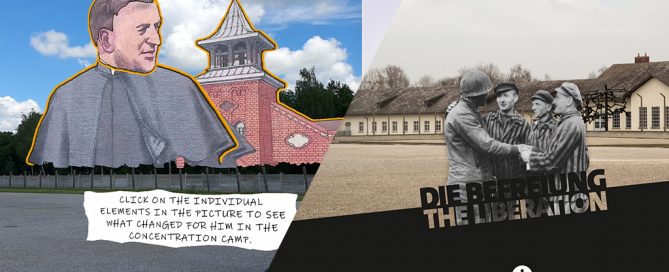
by Prof. Victoria Grace Richardson-Walden Our Spotlight series takes a deep dive into the digital offerings of worldwide organisations dedicated to Holocaust memory. This week, Prof. Victoria Grace Richardson-Walden looks at how the community association Gathering the Voices has used digital media to present testimonies of survivors with connections to Scotland, and to enable students to learn about their experiences. As their first digital comic details, Gathering the Voices is a community association with six trustees, based in the Glasgow area. The trustees are three married couples, and the husband of each had at least one parent who experienced the Holocaust. It is a personal project, and the trustees have been able to collect c. 50 interviews because they had developed a substantial level of trust with many interviewees before the project started. It was initially established with a small grant from Sense Over Sectarianism and a gift of several audio recorders that were going to be thrown out by Glasgow Caledonian University (where one of the trustees worked). Since then, the trustees have done immense work to apply for further funding, receiving support from the Heritage Fund which needed to be matched. Nevertheless, it is mostly sustained by a [...]

By |2025-10-03T12:04:22+01:002 October 2025|

Digital Memory Database – Online Beta Test V2.0

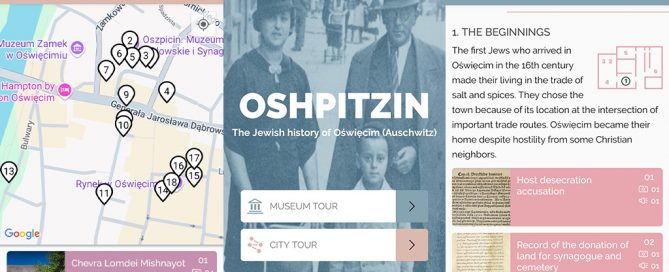
Join us for the final pre-launch user-testing session of the Digital Memory Database! This platform is designed to support memory practitioners, researchers, and creative and tech professionals to learn about existing digital practice in Holocaust memory, giving access to walkthroughs of digital projects and interviews with those involved in creating and disseminating them. In March, we ran a preliminary workshop with digital humanities experts, in April, we ran an alpha-testing session in collaboration with iRights.Lab, Germany’s Digital Collective Memory Platform, and throughout June and July, we ran a series of beta-testing sessions at conferences across Europe. Our work has always been grounded in listening, and so we have listened to all the feedback received to create the beta V2.0 of the site. Now, including a user area, interactive data visualisations, and different access points into the collection. Please join us to provide feedback on these new features. All attendees will receive early access registration later this year – being one of the first to become a formal user of the site before its official launch in January 2026. Please register here.

By |2025-10-08T17:13:37+01:001 October 2025|

Reflections from the Memory Studies Association Conference, Prague

The research team of the Landecker Digital Memory Lab recently attended the Memory Studies Association’s annual conference, the world-leading event in the field, this year held across Charles University and the Czech Academy of Sciences in Prague, Czechia. During the packed, five-day programme, the Lab contributed to five sessions and joined many others. Find out what we shared and learned from three distinct perspectives. By Dr. Ben Pelling, Dr. Kate Marrison and Prof. Victoria Grace Richardson-Walden Dr. Ben Pelling, Research Fellow, Landecker Digital Memory Lab: As someone new to memory studies, the size of MSA Prague was at first quite overwhelming, with more than 1,400 participants. However, this does mean that there are plenty of panel sessions, workshops, tours and other events to suit all areas of scholarship or mere curiosity. There was ample opportunity to sample sessions on topics diverse from one’s own research focus - a great way to learn about new methods and approaches that can be adopted and co-opted as needed or just enjoy the work of scholars studying a completely different topic. One thing I learned during the event was that memory scholars are starting to engage with online, digital and mapping resources in their [...]

By |2025-09-25T13:23:36+01:0025 September 2025|

Researching Holocaust Education and Activism on Social Media

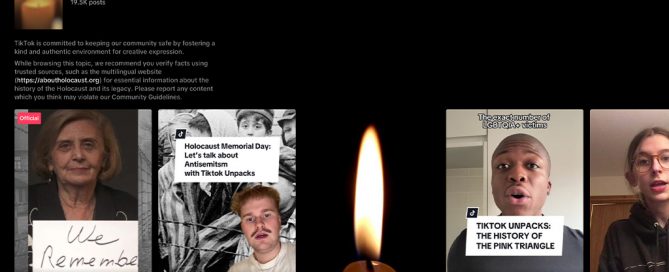
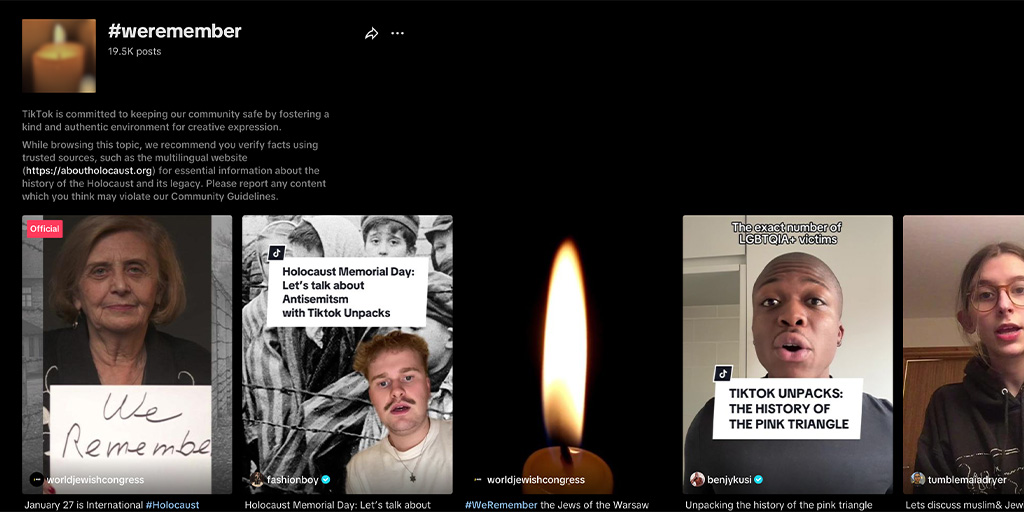
by Dr Stefania Manca How is Holocaust memory being reshaped in the age of TikTok, Instagram, and digital activism? Drawing on her journey from educational technology to digital Holocaust memory and education, our latest visiting fellow explores how social media can both distort and revitalise the memory of the Holocaust. I have been a researcher in educational technology for almost 30 years, focusing on the opportunities and challenges of using digital tools in education. My background in education sciences has helped me develop methods and strategies to integrate digital practices into teaching and learning. In 2018–2019, I decided to connect this professional expertise with my long-standing personal interest in the Holocaust. This step marked the beginning of my engagement with Holocaust memory and education through a digital lens. I started a Doctoral programme in Education and ICT (e-learning) at the Universitat Oberta de Catalunya in Spain, with a project entitled “Teaching and learning about the Holocaust on social media: A learning ecology perspective.” Since 2011, I had already been studying the use of social media in education, so it felt natural to bring these two fields together. At the time, research in this area was still scarce, as highlighted in [...]

By |2025-09-11T11:48:51+01:0011 September 2025|

Surveying Global Digital Holocaust Memory Practice

By Victoria Grace Richardson-Walden We’re investigating how Holocaust museums, memorial sites, libraries, and educational organisations use digital media in their work. Find out how you can get involved in this week’s blog. Launched earlier this year, the digital Holocaust memory survey seeks to provide a comprehensive overview of digital practice and strategies across this global digital memoryscape. Watch the video interview with Lab Director Prof. Victoria Grace Richardson-Walden to find out more. https://youtu.be/CZgkEK5sJOA What Do We Want to Know? What type of digital projects are being created and have historically been created across the professional Holocaust education and memory sector What social media channels are used and to what extent accounts of professional organisations are confronted with denial, distortion and misinformation How/ if AI and machine learning are being used in Holocaust education and memory organisations How digital engagement is managed internally, from a strategic through to an operational level. Why? One of our core goals is to build digital literacies and capacities across the sector, and this survey will help us to identify key areas where professionals working in Holocaust museums, memorial sites, libraries and educational organisations (or what we refer in shorthand to as the ‘Holocaust [...]

By |2025-11-10T14:42:20+00:004 September 2025|
Go to Top