
Behind the Scenes at the Lab

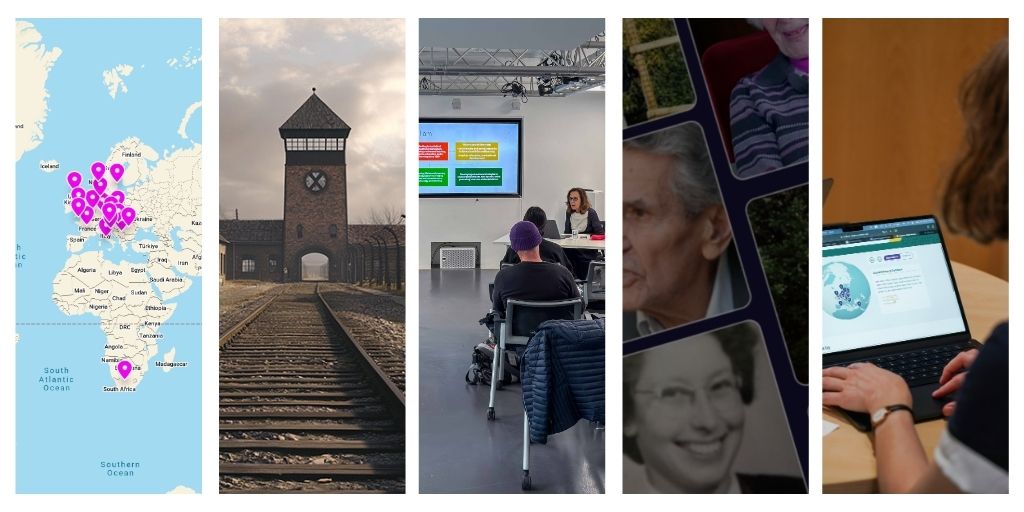
This quarter, we’ve launched a global survey of digital Holocaust memory, continue work on our database, published on AI and Collective Memory, developed digital humanities skills, hosted a Holocaust Education visiting fellow, continued working on our digital memory database, and much more. Take a look at what the Lab has achieved over the last few months. Since the Summer, the team’s main focus has been on the development of the Digital Memory Database following its beta launch at our inaugural Connective Holocaust Commemoration Expo 2025. The resource aims to be a ‘living’ collection of global digital Holocaust memory practice from the 1990s into the future containing curatorial and collaborative tools. Database test session. Credit: Dr. Ben Pelling. In close collaboration with Research Software Engineer, James Alvarez and the design team at Chimney, the development of this flagship resource has been based on rigorous user testing sessions led by the Lab’s Research team. Work on the database has included: Writing methodologies Developing materials to guide users Transcription checking Indexing Software development Design Functionality testing (as well as user-testing) Quality assurance checks Preparation of digital assets September In September, when the BBC ran an article about spammers profiting from AI [...]
By |2025-11-27T23:16:15+00:0027 November 2025|

Why We Shouldn’t Be Surprised about #AI #Auschwitz, and What We Can Do About It

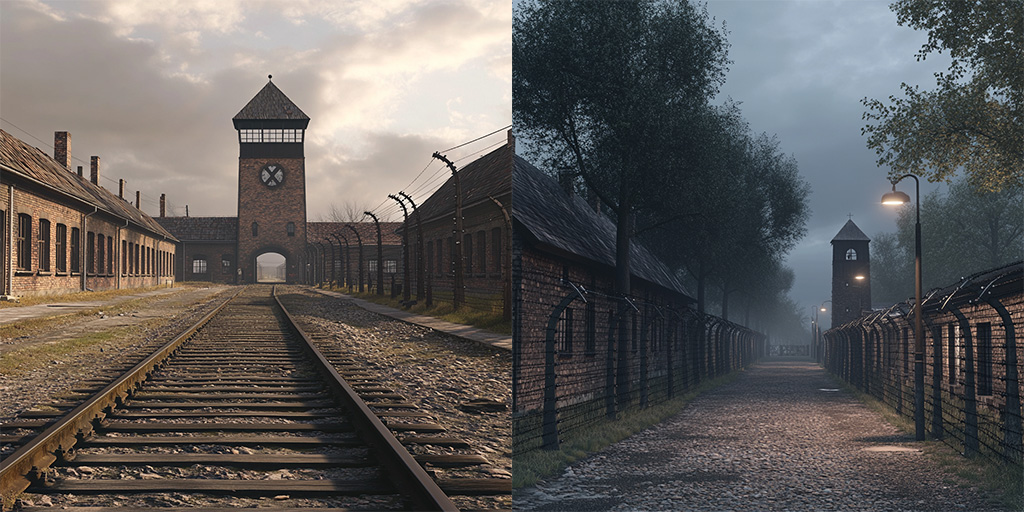
By Prof. Victoria Grace Richardson-Walden Last week the BBC reported on spammers sharing ‘AI slop’ images of Auschwitz for profit. In this week’s blog, we respond to their article, reflecting on our years of research into Holocaust memory and AI. On Friday 29th August, the BBC published an article with the headline: ‘BBC reveals web of spammers profiting from AI Holocaust images.’ Whilst this might seem shocking, it shouldn’t be, and far from ‘spamming’, which can be considered a flippant action, the individuals involved in these profit-making schemes are using social media in conscious and sophisticated ways – as its logics intend it to be used. This should make us stop and ask: are platforms like Facebook good for Holocaust memory? On one hand, it would be easy (especially in the current political climate) to say, ‘not really’. On the other hand, if Holocaust museums and educational organisations want their authority to remain recognised widely, they need to be not only be present on these sites but enhance their visibility. As our previous research has argued (Walden 2021), professional Holocaust organisations need to adopt the strategies of apparent ‘bad actors’ if they want their messages to circulate as much as [...]

By |2025-09-02T13:32:24+01:002 September 2025|
Go to Top