

Visualisations and the Digital Memory Database

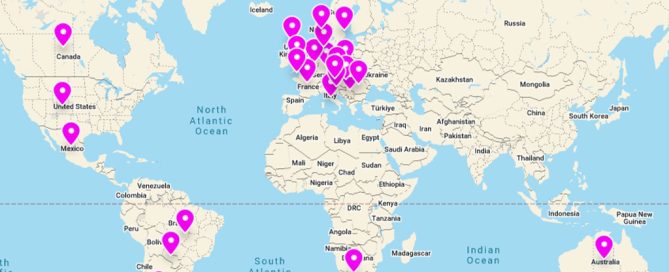
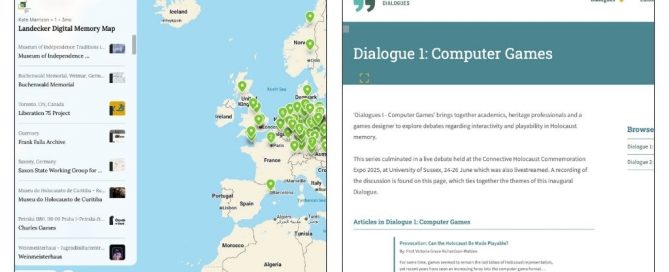
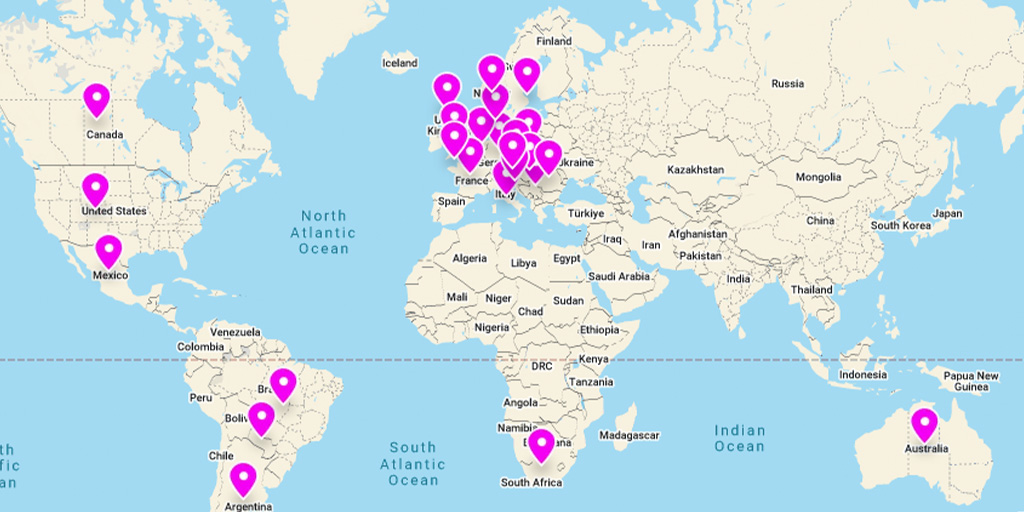
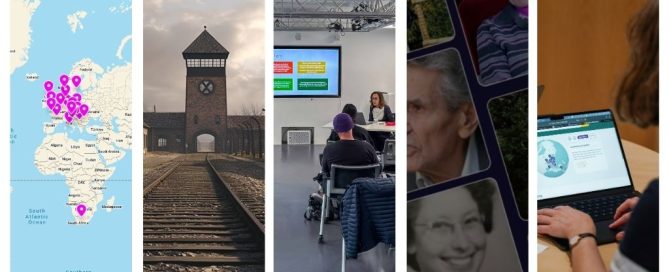
By Dr. Ben Pelling In this week’s blog, Research Fellow Dr, Ben Pelling introduces the data visualisations embedded into the Digital Memory Database – our flagship platform, launching later this month. In building the Digital Memory Database, to be publicly launched on International Day of Commemoration in Memory of the Victims of the Holocaust, we have included a number of interactive visualisations that use a live feed of the data contained within the database and so adjust and update as new content is added. These visualisations have two purposes – they offer alternative ways to explore the projects, interviews and walkthroughs but also form the foundation for quantitative analysis of the data and metadata captured in the database as a whole. Each has been deliberately designed to provide filtering and sorting options, so that each user can focus on the information they seek. World View (Globe/Map) Central to the homepage is a map, viewable in either globe or ‘flat’ map form, that locates all  the organisations that have been included in the database. Although the database can be interrogated via the search function and browsed via the archive index, the map provides a visual way to explore the content. [...]

By |2026-01-15T12:50:32+00:0015 January 2026|

Behind the Scenes at the Lab

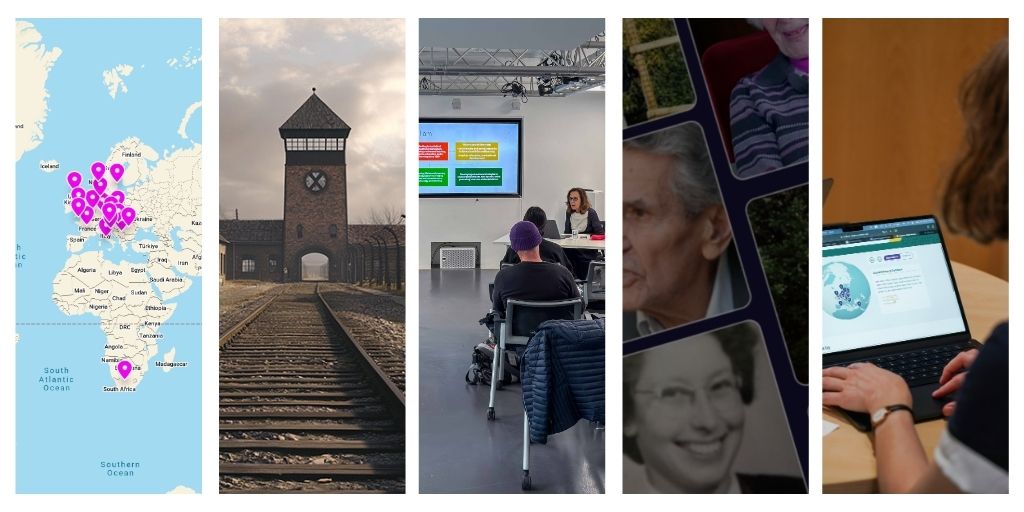
This quarter, we’ve launched a global survey of digital Holocaust memory, continue work on our database, published on AI and Collective Memory, developed digital humanities skills, hosted a Holocaust Education visiting fellow, continued working on our digital memory database, and much more. Take a look at what the Lab has achieved over the last few months. Since the Summer, the team’s main focus has been on the development of the Digital Memory Database following its beta launch at our inaugural Connective Holocaust Commemoration Expo 2025. The resource aims to be a ‘living’ collection of global digital Holocaust memory practice from the 1990s into the future containing curatorial and collaborative tools. Database test session. Credit: Dr. Ben Pelling. In close collaboration with Research Software Engineer, James Alvarez and the design team at Chimney, the development of this flagship resource has been based on rigorous user testing sessions led by the Lab’s Research team. Work on the database has included: Writing methodologies Developing materials to guide users Transcription checking Indexing Software development Design Functionality testing (as well as user-testing) Quality assurance checks Preparation of digital assets September In September, when the BBC ran an article about spammers profiting from AI [...]

By |2025-11-27T23:16:15+00:0027 November 2025|

User testing the Digital Memory Database

Over the past five months, the Landecker Digital Memory Lab research team have been user testing our flagship resource – the Digital Memory Database – containing a collection of global digital Holocaust memory practice. By Dr. Kate Marrison and Dr. Ben Pelling In April 2025, the Digital Collective Memory Platform provided the perfect space for us to kick off a series of user testing sessions designed to test and gather feedback on the living-database archive. Joining online, trusted colleagues and friends working in the field of digital memory were the first to be introduced to the wire-framed version of the database in its alpha state. Listening to their feedback, we further developed the site (as discussed below) and our inaugural Connective Holocaust Commemoration Expo marked the official beta-launch where we showcased the database to a wide range of academics, educators, filmmakers, digital creatives and heritage professionals from more than 30 countries across the Middle East, Latin America, North America, Europe and Asia. This was immediately followed by a workshop at the biennial Max and Hilde Kochmann Summer School for PhD students in Modern European-Jewish History and Culture hosted by the Sussex Weidenfeld Institute of Jewish Studies in cooperation with [...]

By |2025-10-09T09:04:21+01:009 October 2025|

Surveying Global Digital Holocaust Memory Practice

By Victoria Grace Richardson-Walden We’re investigating how Holocaust museums, memorial sites, libraries, and educational organisations use digital media in their work. Find out how you can get involved in this week’s blog. Launched earlier this year, the digital Holocaust memory survey seeks to provide a comprehensive overview of digital practice and strategies across this global digital memoryscape. Watch the video interview with Lab Director Prof. Victoria Grace Richardson-Walden to find out more. https://youtu.be/CZgkEK5sJOA What Do We Want to Know? What type of digital projects are being created and have historically been created across the professional Holocaust education and memory sector What social media channels are used and to what extent accounts of professional organisations are confronted with denial, distortion and misinformation How/ if AI and machine learning are being used in Holocaust education and memory organisations How digital engagement is managed internally, from a strategic through to an operational level. Why? One of our core goals is to build digital literacies and capacities across the sector, and this survey will help us to identify key areas where professionals working in Holocaust museums, memorial sites, libraries and educational organisations (or what we refer in shorthand to as the ‘Holocaust [...]

By |2025-11-10T14:42:20+00:004 September 2025|

Digital Holocaust Memory – Resources and Readings

Over the summer, the Landecker Digital Memory Lab team members are busy taking well-deserved breaks. Whilst our blog goes on hiatus, here are some suggested reads from our back catalogue which might help inspire or inform your autumn teaching, research and practice. The remit of the Landecker Digital Memory Lab is broad – we conceptualise ‘the digital’ as socio-technical and thus connective, and as an entanglement of human and computational actancies. But what does this mean in practice? Firstly, it means our research covers a range of different digital media, this includes computer games. Last year we hosted an international junior research associate, Austin Xie, from the University of Chicago who thought through the challenges of navigating Holocaust memory in computer games shared in two blogs on our site, part I and part II. We also launched recommendations for using VR, XR and computer games. We captured more on these topics in our blog archive, check out pieces on Playing Memories,  Reading Call of Duty, and student ideas for Holocaust computer games. The first series of our new Digital Memory Dialogues also focuses on this topic asking to what extent can the Holocaust be made playable in computer games? This [...]

By |2025-08-28T13:23:52+01:0014 August 2025|

Behind the Scenes at the Lab: What’s in the Works?

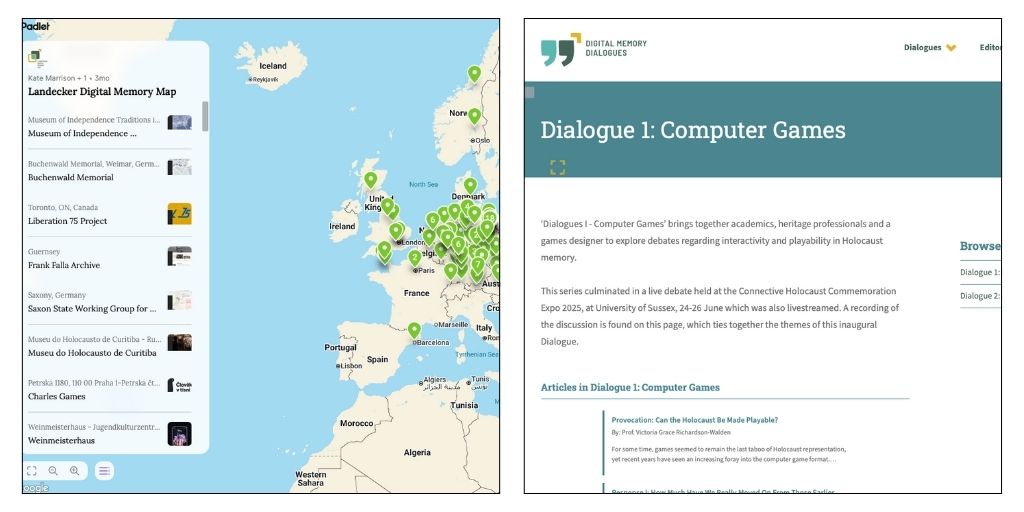
By Mel Poluck Take a look at what the Lab has been working on over the last few months and what is coming up next. This spring, since our last quarterly round-up, the whole team has been mainly focused on preparing and running our first major international event and developing two new core resources: the Digital Memory Database and Digital Memory Dialogues, as well as continuing our mission to realign the field of digital Holocaust memory studies and ensure Holocaust memory is sustainable in the digital age. April In the run-up to the 80th anniversary of the liberation of the last Nazi-run concentration camps, including Bergen-Belsen, we launched a social media campaign to showcase our nine official partners’ Holocaust memory digital projects. This culminated in the launch of our Digital Holocaust Memory Map, developed as part of the broader work we’re doing to develop a global, perpetual ‘living database-archive’ of digital Holocaust memory projects which seeks to collect historical and contemporary digital Holocaust memory practice. The platform will serve to : Allow practitioners in Holocaust museums, memorial sites, libraries and educational organisations to learn from each other’s experiences and save on ‘reinventing the wheel’ each time a new digital endeavour [...]

By |2025-11-10T14:59:59+00:0031 July 2025|

The Inaugural Connective Holocaust Commemoration Expo 2025

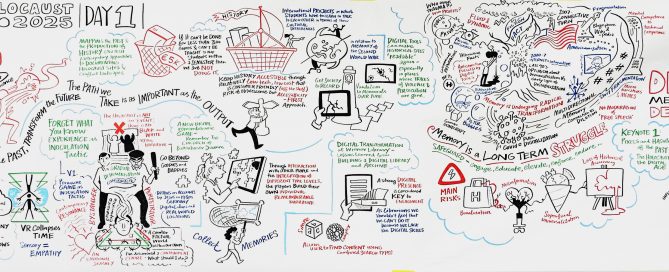
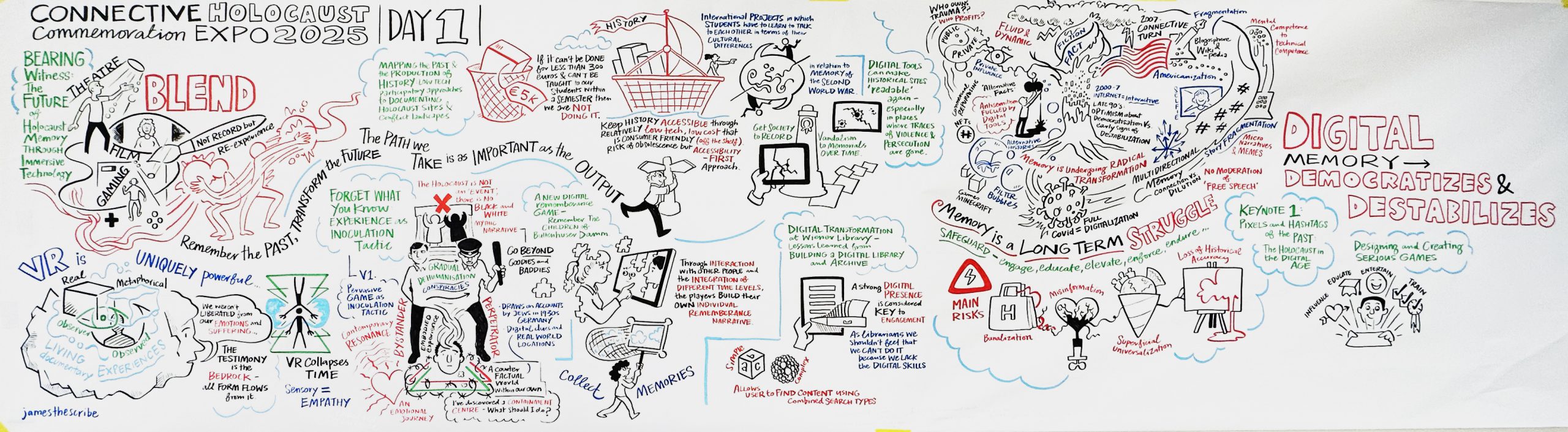
By Mel Poluck We built a games arcade, an exhibitor hall, set up various exhibitions and VR suites, ran a mini project hack, showcased work-in-progress, learnt new skills through workshops, engaged in debates and discussions, networked, hosted ‘let's play’ sessions and went to the beach together. This was the inaugural Connective Holocaust Commemoration Expo 2025. Why did we do it?    One of the overarching aims of the Landecker Digital memory Lab is to create a community of individuals and organisations working in the field of digital memory that cuts across traditional silos, nationalities and disciplines. To this end, we are convening a series of three international events, starting with the Connective Holocaust Commemoration Expo 2025, held at University of Sussex last month. After months of intense planning and preparing, on Tuesday 24 June, as delegates began streaming through the doors of the Jubilee building to the registration desk, it was heartening to see attendees arrive from so many affiliations and countries. There were representatives from more than 30 countries among Expo participants, including student ambassadors, from across the Middle East, from Latin America, North America, Europe and Asia. https://youtube.com/shorts/v4dRS_Jc5Zo Setting the tone We wanted to create an event that [...]

By |2025-08-15T09:31:03+01:0022 July 2025|
Go to Top