
New Sites of Memory Making: Augmented Reality and Holocaust Memory

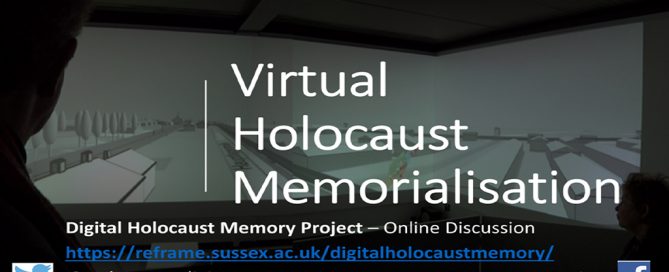
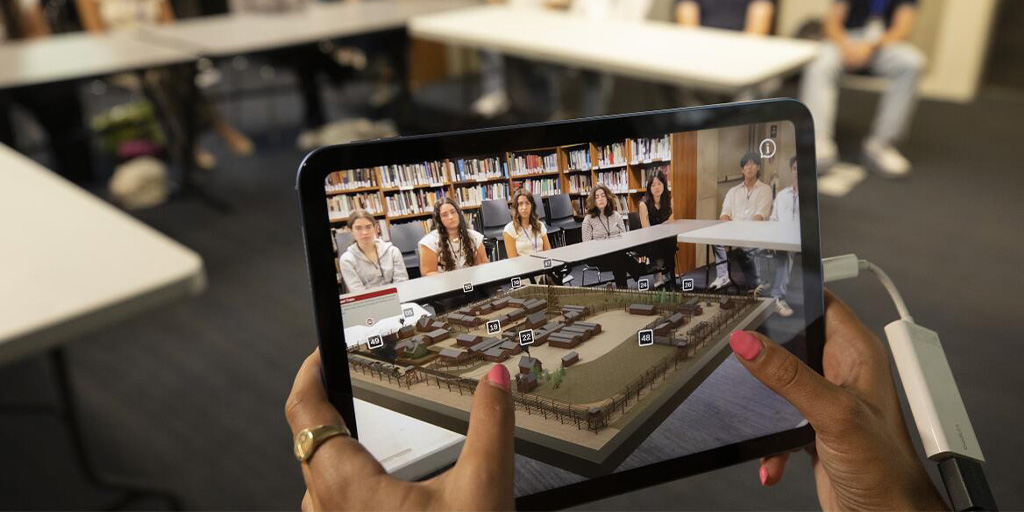
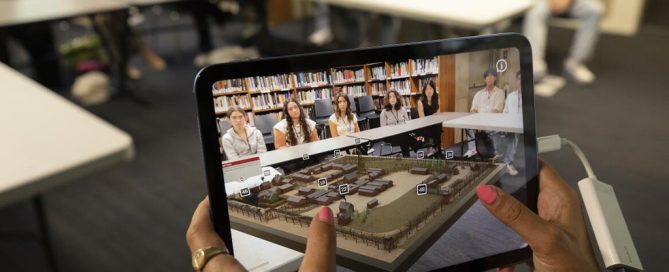
By Prof. Victoria Grace Richardson-Walden Augmented Reality or ‘AR’ is still an emerging field in Holocaust memory. We explore examples from AR practice and theory and propose five recommendations for its future development. What do we mean when we talk about ‘augmented reality’ or ‘AR’ projects? Blancas et al. (2021) bring together several definitions which emphasise that AR does not refer to a singular medium or technology: Augmented Reality (AR) enriches the physical world with digital information, annotating reality and supplementing it with additional information (Feiner et al., 1997). A classical definition considers it a form of Mixed Reality (XR) in which a real-world view is supplemented by synthetic sensory input (Milgram & Kishino, 1994). For some authors, AR should fulfil at least three properties: combining real and virtual, interactive in real time, and registered in three dimensions (Azuma, 1997). An ideal AR system would make users believe the virtual and real objects coexist in the same space, blurring the frontier between real and virtual (Billinghurst et al., 2002). It might be best then to define augmented reality as: a particular mode of mediation, which produces a specific relationship between the body and the lived-world with and through media. [...]
By |2025-10-30T10:32:10+00:0030 October 2025|

Spotlight: The Falstad Centre

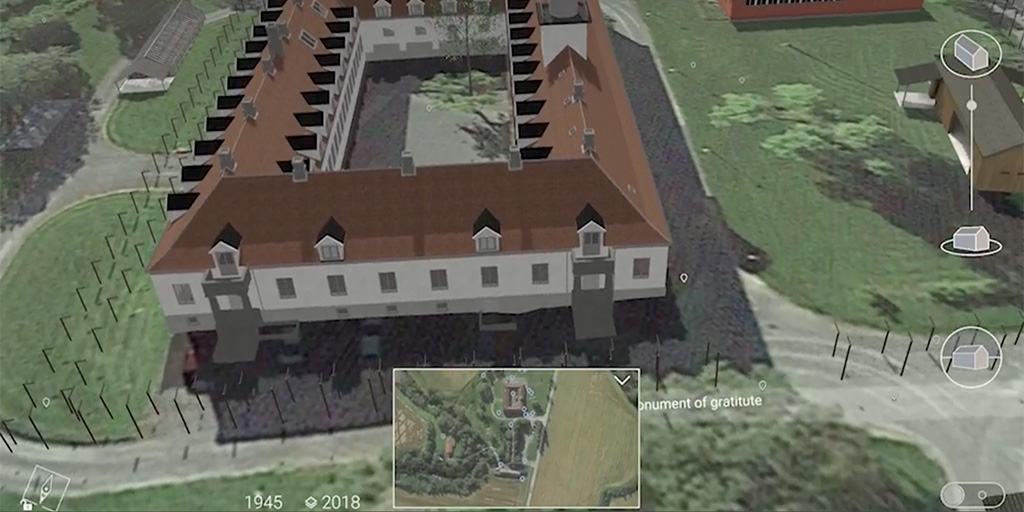
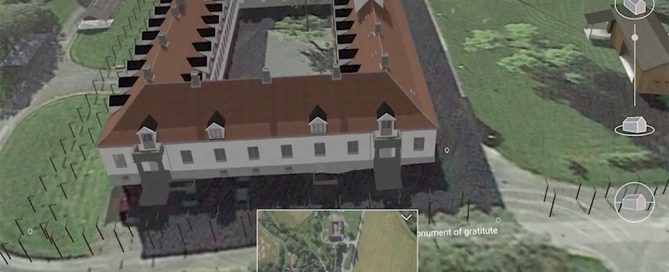
By Dr. Ben Pelling Our Spotlight series takes a deeper dive into the digital offerings of worldwide memorial sites. This week, Dr. Ben Pelling looks at how the Falstad Museum, Memorial and Human Rights Centre has used technology to enhance its offerings and educational programme and how it overcame some of the challenges this has presented.  Within the top 5 results following a Google search of “Falstad Prison Camp” is a page from the Visit Norway website announcing a guest house for up to 55 guests and the description: “Experience serenity in a rural setting at the Falstad Center, a national memorial situated within the main building of the former German prison camp, SS Strafgefangenlager Falstad, dating back to World War II.” Guests can access the museum’s exhibitions, libraries and more. While perhaps surprising, this is actually just one in a long line of reinventions and changes in the history of the former prison camp. Falstad: School, Prison, Museum & Memorial The remote site was first established in 1895 as a Reformative School for Troubled Boys, part of a movement that at the time was seen as a progressive. But in October 1941, the occupying German forces seized the property [...]

By |2025-09-18T15:13:00+01:0018 September 2025|

Spotlight: Dachau Memorial

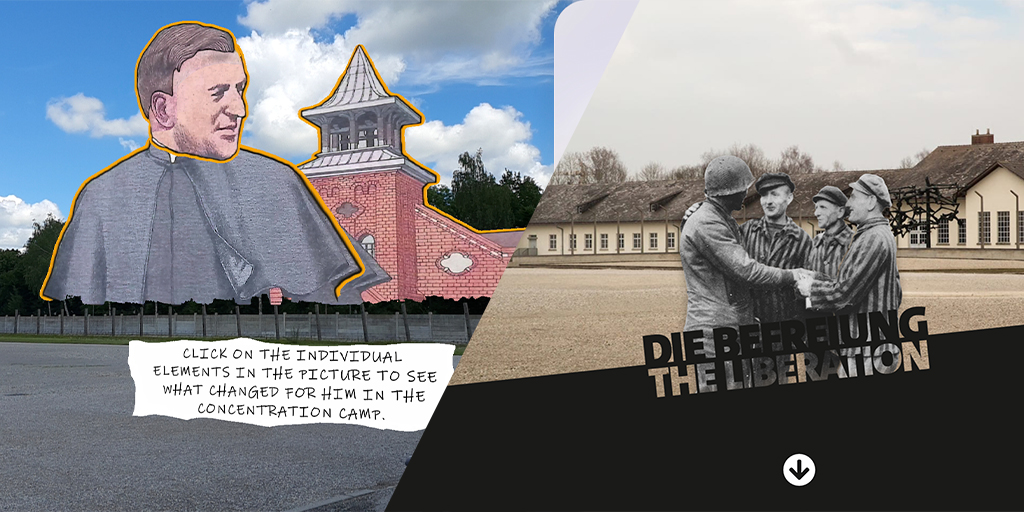
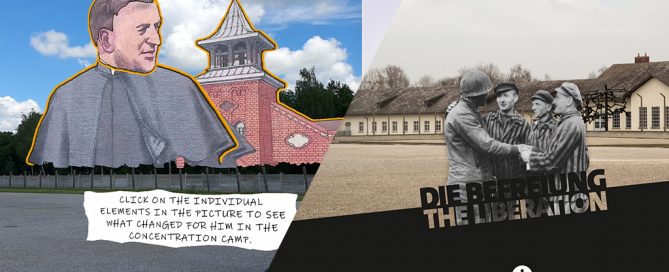
By Prof. Victoria Grace Richardson-Walden The Director of the Landecker Digital Memory Lab reflects on how digitally-mediated experiences of Dachau Memorial rearrange the site’s meaning and affect for her. On arrival at KZ-Gedenkstätte Dachau, most visitors close the gate which reads ‘Arbeit Macht Frei’ so they can take a photograph of the infamous slogan. There is no suggestion from the site’s curators or educators that this is a proposed activity at the site – indeed there is no invitation to ‘touch’ historical things (although the gate in-situ is a replica), yet most visitors feel compelled to do this – perhaps due to the iconicity of these three words. This now ritualistic behaviour is illustrative of the fact that however well ‘curated’ or ‘managed’ memorial sites seem to be, their role as memorial spaces and the meaning and relations relating to the past constructed there rely on the performativity of the multitude of different agents who come to occupy the place – however transiently. As I walked through the gate the first time during a 5-day research trip to the site, my eyes and thus my whole-bodily attention were draw to two things immediately: the guard tower across the roll call [...]

By |2025-02-26T17:26:23+00:0026 February 2025|

Spotlight on Žanis Lipke Memorial

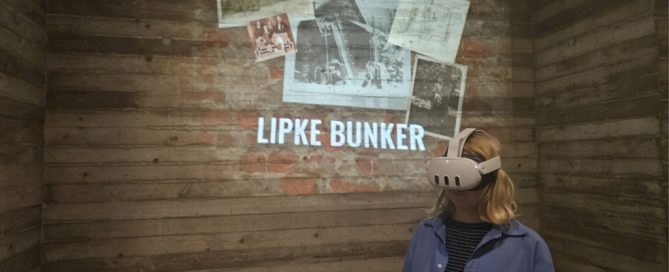
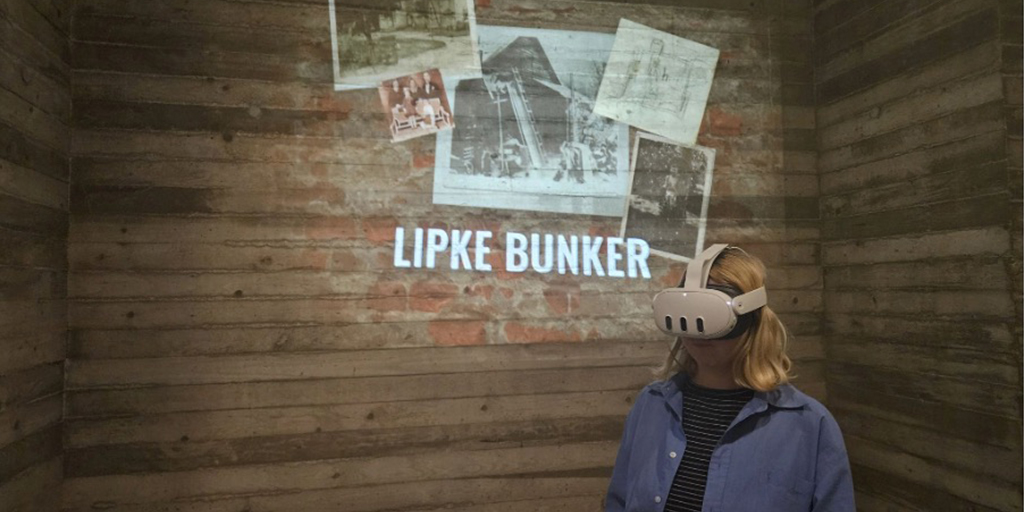
by Dr Kate Marrison In this long-form series, we offer a deep dive introduction to digital projects at a Holocaust organisation. Each month, our ‘spotlight’ institutions will feature in our upcoming living database-archive. The journey to the Žanis Lipke Memorial took us on-foot over the Vanšu Bridge, which crosses the Daugava River, in Riga. A quick online search reveals that the word vanšu refers to the cables suspending its deck, comparing them to nautical rigging (also known as shrouds in English). Upon reaching the other side, we arrived in Ķīpsala Island, which was originally a fishing village, and followed Google Maps down the 150-year-old cobbled streets to discover the entrance to the memorial tucked behind houses at the end of a quiet lane. Aptly described by some as “Riga’s best-hidden museum”, this memorial is dedicated to the memory of Latvian Žanis (or Jānis) Lipke, who saved Jews from the Riga ghetto by hiding them in an underground bunker during the Nazi occupation of Latvia. The 3x3 metres bunker, built in 1942, housed between 8-12 people at a time. In total, between 1941 and 1945, the Lipke Family and their helpers successfully saved the lives of more than 50 Jews. The memorial itself, [...]

By |2024-11-11T14:29:34+00:0030 October 2024|

Spotlight on Melbourne Holocaust Museum

by Victoria Grace Walden In perhaps the most unusual way to return from maternity leave, my first day back involved a 24-hour journey from the UK to Melbourne, Australia (and yes, with the baby!). When I originally got in contact with Anna Hirsh – now Manager of Collections and Research at the museum and the fabulous host of my scholar-in-residence – she was working at what was then called Melbourne’s Jewish Holocaust Centre and in 2020 the site closed its doors for a major refurbishment and rebranding. A Long History of Multimedia At that time, staff created a virtual walkthrough of the main exhibition to archive its existence. Now it was closed (as it would have been – pandemic or not), school groups and other visitors could explore its content. This was not just a photo-realist experience of the exhibition space though; it was enhanced by extra video content such as behind-the-scenes moments with curators (Curators’ Corner series) and importantly mini-tours from survivors explaining some of the exhibited materials - much of this additional content came from existing digital projects. Jewish Holocaust Centre Melbourne Virtual Tour The centre was established by a survivor community, opening in March 1984. [...]

By |2024-11-28T11:14:11+00:0026 September 2024|

Shaping the Future Use of VR, AR and Computer Games in Holocaust Memory

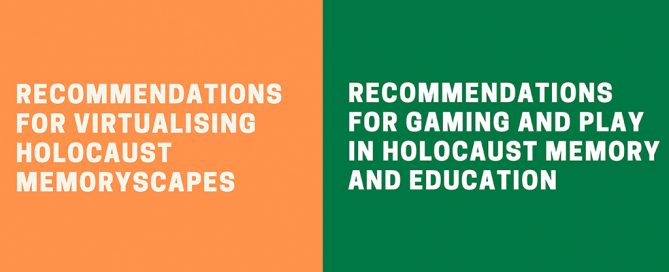
by Dr Victoria Grace Richardson-Walden As more Holocaust institutions feel emboldened to incorporate digital media into their practices, it is increasingly urgent that there are clear guidelines to help shape their thinking. In response to this urgency, the new Landecker Digital Memory Lab has arrived and begins by publishing the final two recommendation reports  of the Digital Holocaust Memory Project's previous work. They offer guidelines for a more sustainable approach to using virtual and augmented reality, and computer games for Holocaust memory and education. The latest reports mark the completion of the set, which broadly looked at digital interventions in Holocaust memory and education (read the other recommendations here, which cover AI and machine learning, digitising material evidence, social media and digitally recording, recirculating and remixing Holocaust testimony). The reports ask provocative questions of those responsible for the future of Holocaust memory: major tech companies, policymakers, academia, and Holocaust museums, memorials and archives. Key recommendations from the two latest reports, ‘Virtualising Holocaust Memoryscapes’ and ‘Gaming and Play’ include: conduct thorough research into the impact of digital Holocaust projects establish technology working groups to help propel development in this field create spaces to share knowledge and ideas provide training and support [...]

By |2024-11-28T11:17:37+00:0011 July 2024|

Holocaust Remembrance in a Digital Future: Towards Deep Truth or Deep Fake?

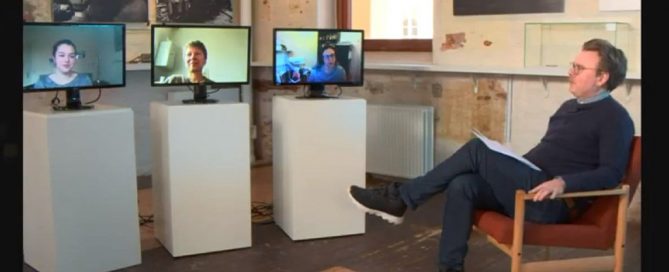
On Thursday 4th February, I was very honoured to join Stephanie Billib, Bergen-Belsen Memorial, and PhD candidate Tabea Widemann to discuss the tensions between 'deep truth' and 'deep fake' in digital Holocaust remembrance. The panel was part of a larger programme: The Digitalisation of Memory: Technology - Possibilities - Boundaries hosted in partnership between the Falstad Centre in Norway, and POLIN Museum of the History of Polish Jews, Poland. In this week's blog, I reflect on some of the themes that arose in that panel.   The End of an Era? Whilst there were earlier instances of testimony gathering (including David Boder's immediate post-war recordings and the extensive Fortunoff collection at Yale in the 1970s), since the 1990s, the impetus to record survivor testimonies in a range of media formats has been heightened by the fear of an approaching post-witness age (Tanja Schult and Diana I. Popescu). This has been framed as an end of an era, as the Holocaust shifting from living memory to mediated memory (James E. Young) or from what Annette Wieviorka termed 'the era of the witness' to the 'era of the user' (Susan Hogervorst). Yet such framing makes three assumptions: That digital technology, or media [...]

By |2024-11-28T11:19:54+00:0012 February 2021|
Go to Top